
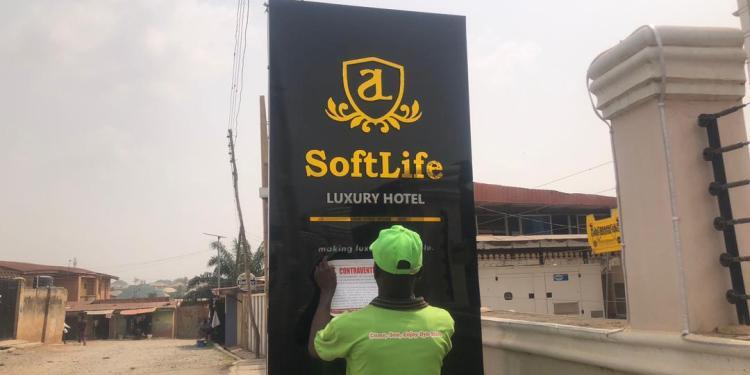
The Oyo State Government has commenced a rigorous enforcement exercise targeting unregistered hospitality establishments across the state capital, serving contravention notices to over one hundred hotels and guest houses in Ibadan. This decisive action, spearheaded by the Ministry of Culture and Tourism through the State Tourism Board, aims to bring operators into compliance with the state's regulatory framework. The affected businesses have been accused of operating in violation of the Oyo State Tourism and Hospitality Law No. 22 of 2020, having failed to register or renew their operational licenses despite repeated warnings and sensitization efforts by the government.
Leading the enforcement team, the Director of Administration and Supplies at the Ministry, Mr. Ayodele Adesope, explained that the move became necessary after a significant number of hoteliers ignored the government's calls for voluntary compliance. He noted that the ministry had spent the last few years engaging stakeholders through various media platforms and town hall meetings to educate them on the necessity of regularizing their businesses. However, the recalcitrance of many operators forced the government to escalate its approach from persuasion to enforcement. The current exercise covers key areas in Ibadan, including Ikolaba, Alakia, and Iwo Road, with plans to extend the drive to other zones such as Oke-Ogun and Ogbomosho in the coming weeks.
The contravention notices served on the establishments come with a strict seven-day ultimatum. Owners have been directed to report to the State Tourism Board to finalize their registration or renewal processes within this window. Failure to comply carries severe consequences as prescribed by the state law. Specifically, Sections 3 and 16(1)(a) of the relevant statute empower the government to seal non-compliant premises. Additionally, convicted defaulters face a fine of two hundred thousand naira, with an extra fifty thousand naira penalty required before any sealed premises can be reopened. This strict legal backing underscores the government's resolve to sanitize the sector.
Among the prominent establishments affected by the enforcement drive are Carlton Gate Xclusive Hotel, Owu Crown Hotels, and 77 Palms in Ikolaba. The list also includes Mingles Hotels and Suites, PAMDIN Hotels, and several others located along the Alakia and New Gbagi axes. The widespread nature of the enforcement indicates that the government is casting a wide net, targeting both large-scale luxury hotels and smaller guest houses. Mr. Adesope expressed optimism that about eighty percent of those served would comply before the expiration of the deadline, noting that some owners had already begun making inquiries at the board following the visit of the enforcement team.
The Public Relations Officer of the Oyo State Hotel Owners Association, Prince Adekunle Adesanya, has thrown the weight of the association behind the government's action. He expressed deep concern over the low compliance rate in the sector, revealing a startling statistic: out of over ten thousand hotels estimated to be operating in Oyo State, fewer than four hundred are officially registered. He likened the registration requirement to the operational certifications needed for schools and hospitals, arguing that the hospitality sector cannot be an ungoverned space. He urged his members to see the registration not as a punitive tax, but as a necessary license to operate legally.
A major driver behind this enforcement push is security. Prince Adesanya highlighted that unregistered hotels often become blind spots in the state's security architecture. By bringing all hospitality businesses under a unified regulatory banner, the government aims to enhance its ability to monitor the sector and prevent criminal elements from using hotels as safe havens. The association spokesman warned that the era of operating "under the radar" is over, and that the association would not support any member whose negligence threatens public safety or the collective reputation of the industry.
The current phase of issuing notices is described as a final warning before the commencement of physical closures. The government has made it clear that once the seven-day grace period elapses, the Tourism Board will return to seal off defaulting premises. This "carrot and stick" approach is designed to maximize compliance while minimizing immediate disruption to the economy. However, the explicit threat of locking up businesses sends a strong signal that the administration is prioritizing regulatory order over the convenience of business owners.
As the deadline approaches, the pressure is now on the affected hoteliers to regularize their status. The outcome of this enforcement drive is expected to significantly boost the state's database of hospitality businesses and improve Internally Generated Revenue (IGR). Moreover, it sets a precedent for other sectors in the state, reinforcing the message that the Makinde administration is intent on enforcing the rule of law and ensuring that all commercial entities operate within the ambit of state regulations.

Leave a comment
Your email address will not be published. Required fields are marked *

