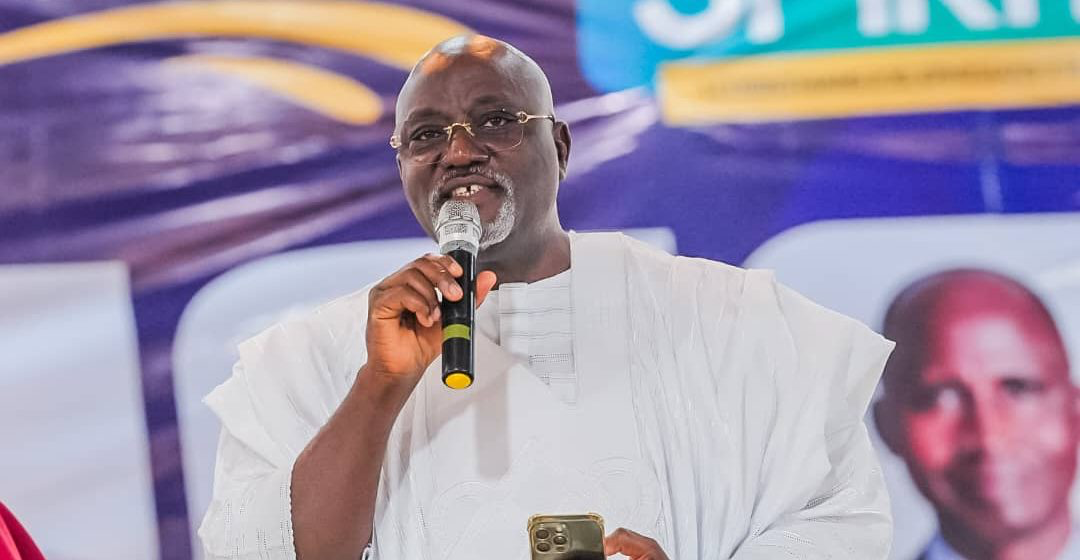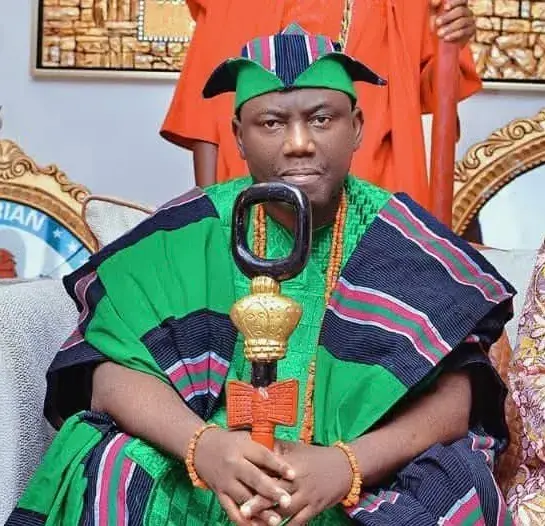
The Alaafin of Oyo, Oba Abimbola Akeem Owoade I, has formally declared that the authority to confer chieftaincy titles bearing the suffix "of Yorubaland" resides exclusively with the Oyo throne. This assertive proclamation was made on Sunday at the Aganju Forecourt of the Aafin Oyo, during the high-profile installation ceremony of Senator Abdul-Aziz Yari as the Obaloyin of Yorubaland and Barrister Seyi Tinubu as the Okanlomo of Yorubaland. The monarch’s statement effectively draws a line in the sand regarding the hierarchy of traditional rulers in the South West, challenging the legitimacy of other monarchs who have attempted to bestow similar regional titles.
In his address, Oba Owoade provided a detailed historical and legal framework to justify his position, arguing that chieftaincy in Yoruba culture is not merely decorative but is a function of structural authority. He posited that while all thrones are sacred, they were "not created equal in function." According to the Alaafin, the Oyo throne has historically served as the central coordinating power for the Yoruba race, a reality that predates modern governance. He emphasized that titles reflecting the entire region are "collective titles" rather than "local titles," and therefore can only be conferred by a sovereign whose jurisdiction historically spans the collective political life of the people.
To bolster his claim, the monarch referenced colonial administrative records, specifically noting the size and influence of the Oyo Province in 1914. He highlighted that the province, which covered over 14,000 square miles and bordered Ilorin, Ondo, and Dahomey, was a reflection of the recognized leadership of the Alaafin over a vast and diverse territory. Oba Owoade argued that the British colonial government did not invent this hierarchy but merely documented an existing structure where the Alaafin operated as a suzerain with influence extending far beyond the walls of Oyo town.
The Alaafin further stated that this historical authority has been affirmed by post-independence councils, scholarly documentation, and the Supreme Court of Nigeria. By invoking the apex court, the monarch framed his supremacy not as a matter of personal ambition or "assumption," but as a settled matter of law and history. He insisted that any title purporting to represent the entire Yoruba nation must proceed from the only throne with the historical and legal mandate to speak for the whole, dismissing claims by other paramount rulers as historically unfounded.
This declaration comes amidst a backdrop of simmering tension within the traditional institution in Oyo State and the wider Yoruba region. It serves as a direct counter-narrative to recent challenges from other quarters, including the Ibadan traditional council, regarding protocols and seniority. By explicitly stating that "authority was never vague" among the Yoruba forebears, Oba Owoade is signaling a return to a more rigid interpretation of traditional hierarchy, one that places Oyo at the apex of the socio-political structure.
During the ceremony, the Alaafin charged the newly installed chiefs, Senator Yari and Seyi Tinubu, to view their titles as positions of trust requiring immense courage and loyalty. He reminded them that holding a title of "Yorubaland" binds them to the collective interest of the race rather than to a specific township. The monarch urged them to serve with humility and ensuring that the honor bestowed upon them contributes to the unity and dignity of the Yoruba people, reinforcing the idea that these titles carry heavy responsibilities.
Observers note that the Alaafin’s speech was carefully crafted to address contemporary political dynamics while rooting his legitimacy in antiquity. By installing high-profile political figures like the President's son and a former Governor under the "Yorubaland" banner, the Alaafin is practically demonstrating his reach and influence. The event, attended by dignitaries from across the country, served as a visual confirmation of the throne's enduring relevance in modern Nigeria.
Ultimately, Oba Owoade’s declaration is expected to spark further debate among historians and traditional stakeholders. It reopens the age-old conversation about the balance of power between the diverse sub-ethnic groups of the Yoruba nation. However, for the Alaafin, the matter is closed: history, law, and structure have placed the burden of central authority on Oyo, and he intends to exercise that authority without equivocation.

Leave a comment
Your email address will not be published. Required fields are marked *