
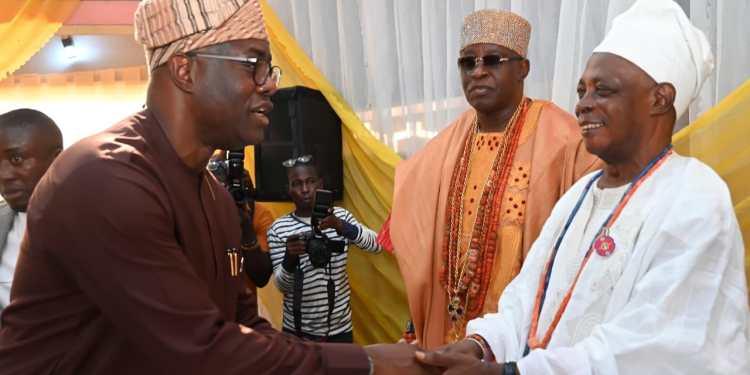
The Palace of the Alaafin of Oyo has issued a stern rebuttal to claims made by the Oyo State Governor, Seyi Makinde, regarding the restructuring of the State Council of Obas and Chiefs. In a formal press release signed by the Director of Media and Publicity to the Alaafin, Bode Durojaiye, the monarch, Oba Engineer Abimbola Akeem Owoade 1, categorically denied ever being consulted by the Governor on the decision to implement a rotational chairmanship for the council. This denial directly contradicts the Governor's public assertion that he had engaged with the three principal traditional rulers—the Alaafin, the Olubadan of Ibadanland, and the Soun of Ogbomoso—before proceeding with the legislative changes that have altered the hierarchy of the state’s traditional institution.
The controversy centers on a statement credited to Governor Makinde, in which he allegedly justified the new rotational arrangement by citing prior consultations with the top-tier monarchs. However, the Alaafin’s palace has described this claim as false, stating unequivocally that no such meeting took place between the monarch and the Governor, nor was there any discussion involving the other mentioned traditional rulers on this specific subject. The release emphasized that at no point did the Alaafin give his endorsement, either verbally or in writing, to the concept of rotating the chairmanship, a position that has historically been a point of contention and sensitivity within the state’s traditional framework.
According to the statement, the Alaafin’s stance on the general management and structure of the State Council of Obas and Chiefs is not a matter of private speculation but has been clearly documented. The Palace referenced a specific memo delivered to the Governor by the Oyo Council of Elders, which enunciated the position of the Alaafin and the entire Oyo community. By pointing to this document, the Palace suggests that the Governor was fully aware of the Alaafin's reservations or alternative views, yet chose to proceed with a narrative of consensus that did not exist. This creates a significant diplomatic rift between the state government and one of the most prominent traditional stools in Yorubaland.
The press release further asserted the Alaafin’s status as the "Paramount Ruler of Oyo Kingdom and the Superior Head of Yorubaland." This specific phrasing serves as a reminder of the historical pre-eminence the Alaafin claims, implying that any decision affecting the collective body of traditional rulers should naturally center on his office. By relegating the Alaafin to a rotational role alongside other monarchs without his express consent, the Palace perceives an attempt to dilute the historical authority and influence of the Oyo throne. The insistence on transparency in the consultation process highlights a feeling of being blindsided by executive action.
This development comes amidst a broader legislative move by the Makinde administration to democratize the leadership of the traditional council, ostensibly to foster unity and a sense of equity among the various zones of the state. However, the denial from the Alaafin’s palace suggests that this policy may have deepened existing fault lines rather than bridging them. The implication is that the "rotational" model, while politically appealing to some quarters, is viewed in Oyo as a departure from established tradition and a slight against the Alaafin's historical standing.
The denial also raises questions about the communication channels between the Agodi Government House and the traditional palaces. If the Governor believes he consulted the monarchs, while the Alaafin vehemently denies it, there is a fundamental breakdown in engagement that could lead to protracted tension. Such a disconnect is dangerous for the stability of the state, as the cooperation of traditional rulers is often vital for grassroots governance and security. The public dispute risks polarizing the state along traditional lines, with supporters of the Alaafin likely to view the Governor’s actions as disrespectful.
Furthermore, the involvement of the Oyo Council of Elders indicates that this is not just a personal grievance of the Oba, but a collective position of the Oyo community. The elders’ memo serves as a formal bureaucratic trail that contradicts the Governor's oral claims. This elevates the dispute from a "he-said-she-said" scenario to a matter of documented record. The Palace's reliance on this memo suggests they are prepared to defend their position with evidence if necessary, challenging the government to produce proof of the alleged consultation.
As the state grapples with the fallout of this denial, the inauguration of the new Council of Obas—with the Olubadan scheduled to start as the head for two years—proceeds under a cloud of controversy. The Alaafin’s refusal to validate the process casts a shadow over the legitimacy of the new arrangement in the eyes of his subjects. The coming days will likely see further maneuvering as both the state government and the traditional institution navigate this delicate power struggle, with the unity of the state's traditional council hanging in the balance.

Leave a comment
Your email address will not be published. Required fields are marked *

