
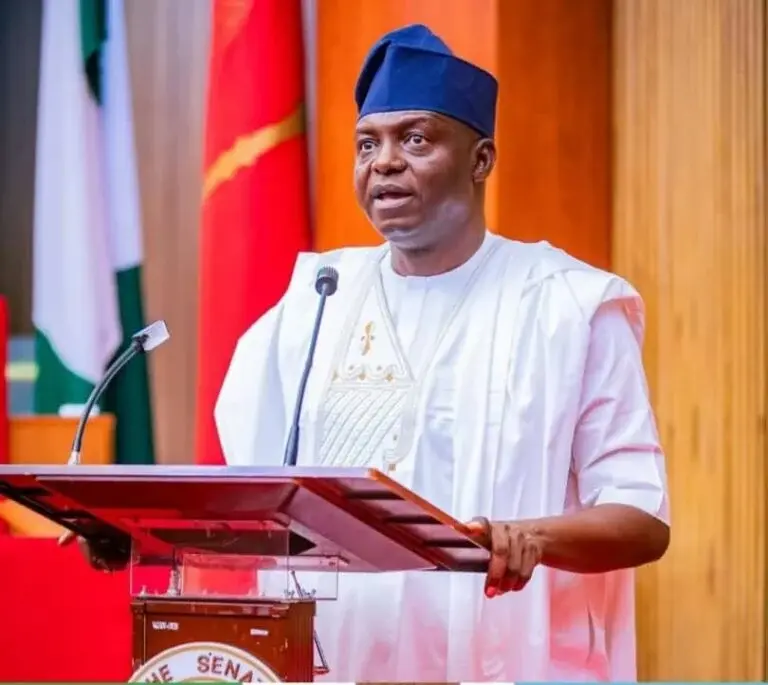
The National Chairman of the All Progressives Congress (APC), Professor Nentawe Yilwatda, has unequivocally positioned himself as a diligent protégé of President Bola Tinubu, attributing his rising political trajectory to the mentorship of the President. Speaking at a grand reception in Kanke Local Government Area of Plateau State, where he was honored with a prestigious traditional title, Yilwatda described the President as the "best politician" Nigeria has ever produced. This public declaration serves not only as a testament to the strong internal cohesion within the ruling party’s hierarchy but also as a strategic signal of the National Chairman’s alignment with the President’s broader political philosophy. By framing his leadership style as a direct derivative of Tinubu’s "school of politics," Yilwatda is effectively consolidating his authority within the party structure, leveraging the President's reputation for political astuteness to bolster his own standing among the party faithful and political observers alike.
The occasion for these remarks was the conferment of the traditional title "Kaeh-rit," which translates to "the good seed of Ampang East," upon the APC Chairman. This cultural recognition underscores Yilwatda's deepening roots in his home state of Plateau and serves as a symbolic endorsement of his leadership by his immediate community. In his acceptance speech, Yilwatda went beyond mere pleasantries to articulate a vision of leadership deeply influenced by the President. He revealed that he had been "adopted" as a son by President Tinubu, a relationship that has evidently provided him with a unique vantage point on governance and political strategy. This "father-son" dynamic, as described by Yilwatda, suggests a level of access and tutelage that few in the political arena possess, portraying the National Chairman not just as an administrator of the party, but as a key stakeholder in the President’s long-term political legacy.
A significant portion of Yilwatda’s address was dedicated to the practical application of this mentorship, particularly in the area of agricultural development and economic empowerment. To mark the occasion, the APC Chairman announced a personal donation of ten million naira, alongside seedlings and other essential farm inputs, to farmers in the locality. He framed this philanthropic gesture as a direct extension of President Tinubu’s "Renewed Hope" agenda, specifically the component focused on enhancing food security and alleviating poverty. By linking his local intervention to the federal government's policy framework, Yilwatda illustrated how the party machinery is being utilized to drive national development goals at the grassroots level. This synchronization of party activity with government policy highlights the "learning" he alluded to—understanding that effective politics must be rooted in tangible deliverables for the electorate.
The political landscape of Plateau State has undergone a seismic shift in recent weeks, a development that Yilwatda addressed with palpable optimism. The recent defection of the state Governor, Caleb Mutfwang, to the All Progressives Congress was cited as a watershed moment for the party in the region. Yilwatda argued that this realignment would bring immense benefits to the state by harmonizing the state and federal government structures under a single political platform. This unification, he posited, would eliminate the friction often associated with opposition governance and streamline the flow of developmental resources from Abuja to Jos. His comments reflect a classic Tinubu-esque strategy: the consolidation of power through alliance-building and the absorption of opposition figures into the ruling fold to create a monolithic political force capable of delivering sustained governance.
In his capacity as the custodian of the party's internal mechanisms, Professor Yilwatda used the platform to reassure both old and new members regarding the APC's operational ethos. He emphatically stated that the party operates on a principle of absolute equality, where a member who joined yesterday possesses the same rights and privileges as one who has been part of the fold for decades. This statement was clearly calibrated to address potential anxieties among long-standing members who might feel threatened by the influx of new defectors like Governor Mutfwang, as well as to welcome the newcomers with open arms. It is a delicate balancing act—managing the egos of entrenched interests while expanding the party’s base—and Yilwatda’s handling of this issue demonstrates the very political dexterity he claims to be imbibing from the President.
The specific choice of words employed by the National Chairman—referring to Tinubu as the "best leader" and "best politician ever produced in Nigeria"—is laden with political import. It reinforces the narrative of President Tinubu as the distinct "Jagaban" figure, a master strategist whose methods are to be studied and replicated. For a National Chairman to publicly subordinate his own political acumen to that of the President is a move that strengthens the President's hand, projecting an image of a party united behind a singular, unquestionable vision. It dismisses any notion of friction between the party secretariat and the presidency, presenting a united front that is crucial as the administration navigates complex economic reforms and prepares for future electoral cycles. Yilwatda is essentially telling the party's critics that the APC is operating as a disciplined, hierarchical entity under the supreme guidance of the President.
Furthermore, the timing of this event and the subsequent remarks is critical. Occurring in late December 2025, amidst the festive period, the event allowed for a convergence of cultural celebration and hard-nosed politicking. The presence of traditional rulers, community leaders, and political heavyweights provided the perfect backdrop for Yilwatda to assert his relevance. The "Kaeh-rit" title itself—"the good seed"— serves as a metaphor he cleverly exploited; implying that he is the "good seed" planted by Tinubu in the fertile ground of national politics, now bearing fruit for his people. This narrative construction is sophisticated, blending local tradition with national political branding to create a compelling persona for the Chairman as a bridge-builder between the ancient customs of his people and the modern exigencies of federal power.
Ultimately, Professor Nentawe Yilwatda’s declarations in Plateau State serve as a microcosm of the current state of the All Progressives Congress. It is a party in expansion mode, aggressively courting opposition governors and consolidating its hold on the nation's political map. It is a party defined by a strong, centralized leadership cult around the President, with key lieutenants like Yilwatda eagerly amplifying the leader's ideology. As the Chairman continues to "learn" from the President, observers can expect the APC to further entrench the strategies of broad-spectrum coalition building, co-option of rivals, and the deep integration of party politics with governance delivery—hallmarks of the Tinubu political playbook that are now being replicated at the helm of the party secretariat.

Leave a comment
Your email address will not be published. Required fields are marked *

