
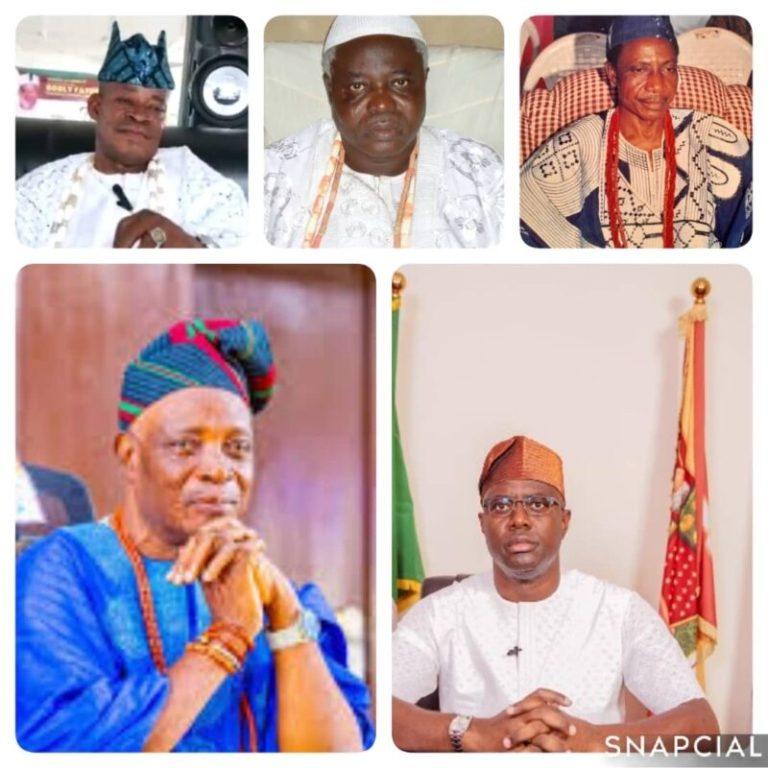
The traditional landscape of Ido town in Oyo State has been plunged into a state of confusion and anxiety as the tussle for the stool of the Onido of Ido intensifies. In a rare and complicated administrative impasse, three distinct claimants are currently vying for recognition as the authentic monarch of the ancient town. The dispute involves the incumbent traditional ruler, Oba Gbolagade Muritala Babalola (Gbadewolu I), and two former occupants of the throne, Chief Tajudeen Adelani Akinola Agura and Chief Benjamin Ademola Isola Orobiyi II, both of whom are challenging their respective depositions and seeking reinstatement. This tripartite struggle has left the community in a precarious position, prompting concerned citizens to issue a passionate plea to the Oyo State Government for a decisive intervention.
At the center of the current storm is the incumbent, Oba Gbolagade Muritala Babalola, who ascended the throne in 2018 following the removal of his predecessor. His reign has been far from tranquil; early in 2024, he faced a significant setback when the Oyo State Government suspended him over alleged links to illegal mining activities in the wake of the Bodija explosion. Although he was reinstated in August 2024 after a six-month suspension, his authority continues to be challenged by the unresolved grievances of those who occupied the seat before him. His supporters maintain that his reinstatement signifies the government's validation of his legitimacy, but his rivals argue that the procedural irregularities of the past remain unaddressed.
The second claimant, Chief Tajudeen Agura, insists that he remains the substantive Onido of Ido. Chief Agura, who was deposed during the administration of the late Governor Abiola Ajimobi, has petitioned Governor Seyi Makinde to revisit his case. He argues that his removal was orchestrated by external forces and lacked legal merit. Agura contends that the Agura family is the sole recognized ruling house according to the 1958 Chieftaincy Declaration, and therefore, any appointment outside this lineage is null and void. His camp has consistently described the current occupancy of the stool as an aberration, warning that ignoring the customary law poses a threat to the heritage of the town.
Adding a third dimension to the conflict is the family of Chief Benjamin Ademola Isola Orobiyi II, who was deposed in 2011. The Orobiyi family has actively appealed to the state government for the restoration of their kinsman, claiming that his removal over a decade ago was unjust and politically motivated. They argue that Chief Orobiyi committed no offense that warranted dethronement and that his rights were trampled upon without due process. This claim resurrects a grievance that predates the tenure of both Agura and Babalola, creating a complex web of historical injustices that the government is now being asked to untangle.
The resulting uncertainty has created a palpable tension within Ido Local Government Area. Community leaders and residents fear that the prolonged litigation and factionalism could hinder development and potentially spark civil unrest. A group of "Concerned Citizens of Ido" has publicly called for a final resolution, urging Governor Seyi Makinde to utilize his executive powers and the wisdom of the traditional council to review the history of the dispute. They argue that the town cannot thrive with "three fathers" fighting for one crown, and that a definitive pronouncement based on truth, custom, and law is the only path to lasting peace.
As the state government weighs its options, legal experts and historians warn that the Ido case serves as a litmus test for the administration of chieftaincy laws in Oyo State. The resolution will require a careful balancing act between respecting court judgments, adhering to ancient customs, and maintaining public order. Until a verdict is reached, the stool of the Onido remains a seat of contention, symbolizing a community divided against itself by the ambitions of its elite.

Leave a comment
Your email address will not be published. Required fields are marked *

