
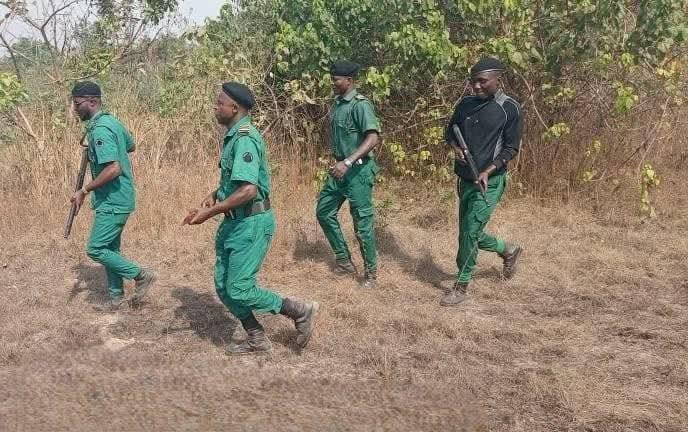
The Federal Government of Nigeria has formally announced the graduation and subsequent deployment of over 7,000 newly trained Forest Guards as part of a strategic offensive against the rising tide of insecurity across the nation. This significant manpower injection into the country's security architecture was coordinated through the Office of the National Security Adviser (ONSA) and targets seven frontline states currently grappling with the menace of banditry, terrorism, and kidnapping. The graduation ceremonies, which took place simultaneously across Borno, Sokoto, Yobe, Adamawa, Niger, Kwara, and Kebbi states on Saturday, mark the operational commencement of the Presidential Forest Guards Initiative. This specialized force is tasked with the critical mandate of reclaiming Nigeria's vast forest reserves, which have historically served as sanctuaries and logistical bases for non-state actors destabilizing the region.
National Security Adviser Mallam Nuhu Ribadu, who oversaw the coordination of the program, emphasized that the deployment of these operatives is immediate, with no transitional gap between their certification and active duty. In a statement released to the press, he confirmed that the administrative machinery has been fully mobilized to ensure that salaries and operational allowances for the guards commence instantly. This directive is designed to boost morale and ensure that the operatives remain focused on their primary objective of holding ground in volatile areas. The urgency of this deployment reflects the federal government's recognition of the critical need to bridge the manpower deficit in the security sector, particularly in remote and hard-to-reach terrains where conventional military forces often face logistical challenges during extended operations.
The recruits underwent a rigorous three-month training regimen designed to transform them into agile, combat-ready field operatives capable of navigating the complex topography of Nigeria’s forests. The curriculum, described as intensive and scientifically structured, integrated environmental conservation principles with advanced paramilitary competencies. Trainees were subjected to grueling physical conditioning, including endurance exercises, obstacle crossing, and long-range patrol simulations. Furthermore, they received specialized instruction in tactical fieldcraft, enemy contact drills, ambush counter-response, and rescue operations. This hybrid training model ensures that the Forest Guards can function effectively as both conservationists protecting national assets and as armed security personnel capable of neutralizing threats within their operational theatres.
The initiative represents a collaborative security intervention between the Federal Government and the respective state governments, aiming to create a seamless security network that permeates the grassroots level. By recruiting personnel from the localities where they will be deployed, the program leverages local knowledge of the terrain, which is often a decisive factor in asymmetric warfare. These guards are expected to serve as first responders and critical intelligence assets, gathering human intelligence that can be actionable for the broader military command. Their presence in the forests is intended to deny criminals the freedom of movement they have enjoyed for years, thereby disrupting supply lines and dismantling the logistical hubs of insurgent groups operating in the North-East and North-West regions.
During the graduation ceremony, officials highlighted the stringent selection and vetting process that characterized the recruitment phase. The program recorded a high completion rate of 98.2 percent, a testament to the resilience and dedication of the participants. However, the rigor of the training was underscored by the disqualification of 81 trainees on disciplinary grounds, ensuring that only those with the requisite character and mental fortitude were retained. Tragically, it was reported that two trainees lost their lives during the course of the program due to pre-existing medical conditions. The authorities expressed their condolences to the families of the deceased while affirming that the remaining graduates have been fully certified and medically cleared for the arduous task of securing the nation’s hinterlands.
The deployment of the Forest Guards aligns with the broader "Renewed Hope" agenda of the current administration, which prioritizes the restoration of law and order as a prerequisite for economic development. The insecurity in the northern regions has severely impacted agricultural productivity, with farmers largely unable to access their farmlands due to the fear of attacks. By securing the forests and rural corridors, the government aims to restore confidence among the agrarian population, thereby addressing the looming food security crisis. The operational strategy dictates that these guards will work in synergy with the military, the police, and the Department of State Services (DSS), creating a multi-layered security grid that makes it increasingly difficult for criminal elements to operate with impunity.
Critics and security experts have long advocated for the decentralization of security efforts and the utilization of specialized forces to tackle specific threats like rural banditry. The actualization of the Forest Guards initiative is seen as a policy response to these recommendations. The Office of the National Security Adviser has assured the public that the operations of these guards will be strictly monitored to ensure adherence to the rules of engagement and respect for human rights. The command and control structure has been streamlined to prevent the excesses often associated with auxiliary security outfits, with clear lines of reporting established between the state commands and the federal oversight bodies.
As the 7,000 operatives move into their assigned posts this week, the expectation is that their presence will lead to a tangible reduction in the frequency of kidnappings and attacks in the affected states. The federal government has signaled that this is merely the pilot phase of the project, with plans to expand the recruitment to other states as the security situation evolves. The success of this cohort will likely determine the future trajectory of state-backed forest security initiatives in Nigeria. For now, the message from Abuja is clear: the forests are no longer safe havens for criminals, and the state is reclaiming every inch of its territory through decisive and coordinated action.

Leave a comment
Your email address will not be published. Required fields are marked *

