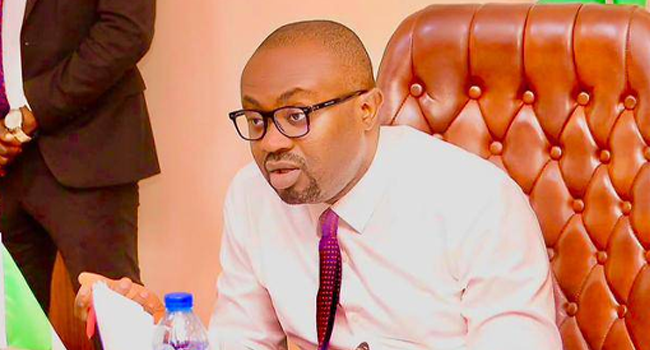
Minister of Interior, Dr. Olubunmi Tunji-Ojo, made this commitment on Thursday in Abuja during the ministry’s mid-tenure performance retreat.
“Our target is very clear: within one week of enrolment, every Nigerian should have their passport in hand. Not just delivering quickly, but delivering quality passports that reflect our integrity as a nation,” he said.
The minister explained that the new system was designed to end the delays and extortion that previously plagued the process, where applicants sometimes waited six to seven months or paid between ₦200,000 and ₦250,000 to fast-track applications.
Sharing a personal experience, Tunji-Ojo recalled that even as chairman of the House Committee on NDDC, he once had to pay hundreds of thousands of naira to secure a passport for his 12-year-old daughter. “That era is over,” he declared.
He noted that the centralised personalisation centre - the largest in Africa - will speed up processing and enhance security. “With this facility, we can print five times more passports than we currently need. Once you enrol, it doesn’t take us more than 24 hours to vet. Printing capacity is no longer our problem,” he said.
Tunji-Ojo further announced that Passport Control Officers (PCOs) will no longer have the authority to approve or delay applications, citing their role in past corruption and inefficiency.
“Some PCOs had so much power that they could hold applications hostage until they were settled. That abuse ends now. By centralising approval, applicants will no longer be at the mercy of individual officers,” he stated.
According to him, the reforms aim to curb racketeering, eliminate unnecessary human contact in the approval chain, and restore trust in Nigeria’s travel documents.
The minister stressed that safeguarding the integrity of the Nigerian passport remains a top priority, noting past cases where foreigners illegally obtained it.
“In one case, a Ugandan woman was caught at Lagos Airport with a Nigerian passport she bought for $1,000. That cannot continue. Our passport must remain a true symbol of Nigerian identity,” he said.
Leave a comment
Your email address will not be published. Required fields are marked *