
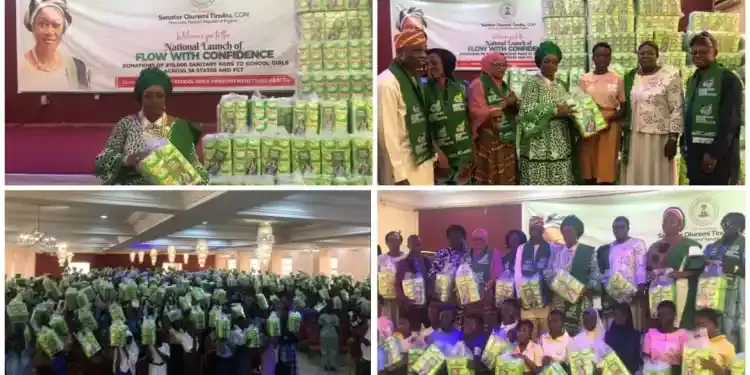
The First Lady of Nigeria has launched a menstrual hygiene intervention in Ibadan, aiming to promote access to sanitary pads and break the stigma surrounding menstruation. Through her Renewed Hope Initiative, she officially flagged off a distribution drive, prioritising young girls and vulnerable communities who often struggle with period poverty and inadequate menstrual care.
During the launch event, the First Lady underscored that no girl should miss school because she lacks access to menstrual hygiene products. She described the provision of sanitary pads as a fundamental step toward empowering female students, boosting their confidence, and ensuring that their education is not disrupted by menstrual challenges.
Beyond distributing products, the initiative emphasises education. The program includes workshops and awareness sessions to teach girls how to manage their menstrual cycles safely, reduce infection risks, and maintain hygiene. The First Lady highlighted the importance of knowledge as much as access, remarking that empowerment begins with informed conversations and proper support systems.
The intervention is structured to reach schoolgirls in both urban and rural areas, ensuring equitable distribution of sanitary products. Officials present at the event underscored that the pads will be dispatched through schools, local government networks, and community organisations, reflecting a coordinated strategy to reach as many beneficiaries as possible.
To support sustainability, the First Lady announced partnerships with local manufacturers to procure quality disposable sanitary pads. She emphasised that encouraging local production is not only cost-effective but also vital for building long-term capacity to address menstrual health needs across Nigeria.
She also called on community leaders, educators and government officials to take ownership of the project. The First Lady urged them to monitor the distribution process, discourage any diversion of supplies, and support girls as champions of menstrual dignity in their communities.
Recognising that cultural taboos still impede open discussion about menstruation, the First Lady stressed that advocacy must go beyond distribution. She encouraged parents, teachers and traditional leaders to normalize conversations around periods, dispel myths, and support young girls in accessing menstrual hygiene resources confidently.
As the intervention rolls out in Ibadan, it is being positioned as a model that could be replicated nationwide. The First Lady made it clear that this initiative is not just about pads — it’s about restoring dignity, keeping girls in school, and building a more menstrual-friendly Nigeria for the next generation.

Leave a comment
Your email address will not be published. Required fields are marked *

