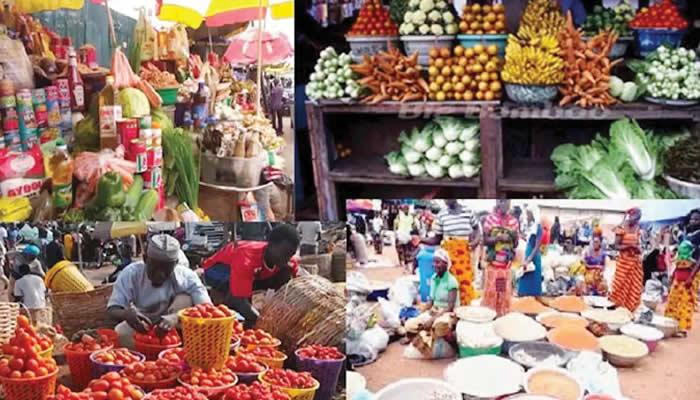
The uproar follows President Bola Tinubu’s recent directive to crash food prices nationwide. Minister of State for Agriculture and Food Security, Sabi Abdullahi, revealed that the President had mandated a Federal Executive Council committee to enforce the order by facilitating safe passage of food commodities across the country.
But farmers argue that pronouncements cannot override market realities. “The cost of food will only fall if input and logistics costs go down,” said Kabir Ibrahim, President of the All Farmers Association of Nigeria. “Our members are already struggling. Imports are killing them. They can’t even afford fertilisers.”
Rice millers expressed similar concerns. Chairman of the Competitive African Rice Forum, Peter Dama, faulted the approach, saying the government should engage stakeholders instead of issuing decrees. “You don’t just order private companies to slash prices. It doesn’t work like that,” he warned, adding that continued imports could drive investors out of the sector.
Unkept Promises, Weak Purchasing Power
Beyond import pressure, stakeholders lamented delays in the distribution of 2,000 tractors launched in July 2024. “Farmers are tired of waiting,” Ibrahim said. An agriculture ministry official confirmed that modalities are still awaiting presidential approval.
Purchasing power remains another obstacle. “Even if prices go down, people cannot afford food,” Ibrahim added. “That’s the real problem.”
Import Surge and Local Fallout
Data from the National Bureau of Statistics showed agricultural imports rising from ₦1.81tn in H1 2024 to ₦2.22tn in H1 2025, a 22.6% jump. The increase followed the government’s 180-day duty-free window, which allowed tax-free importation of staples such as maize, rice, wheat, and millet.
While the policy was meant to curb food inflation, critics say it only flooded the market and hurt local farmers. “Maize sold for ₦60,000 per tonne before. Now it’s ₦30,000. Farmers can’t recover their costs,” Ibrahim explained.
Women farmers also voiced concerns. Chinasa Asonye of the Small-Scale Women Farmers Organisation in Nigeria said poor-quality inputs and expired fertilisers distributed under subsidy schemes worsened losses. “Many silos are filled with grains nobody is buying, while imported rice on the shelves is infested with weevils,” she said.
The Way Forward
Stakeholders insist that subsidies, infrastructure, and proper consultation are the only sustainable solutions. “Transport relief will help, but without real support for local production, we will remain import-dependent,” Dama warned.
With imports rising and farmers abandoning fields, the outlook for Nigeria’s food security remains fragile. Experts caution that without urgent reforms, government interventions may deepen, rather than resolve, the crisis.
Leave a comment
Your email address will not be published. Required fields are marked *