
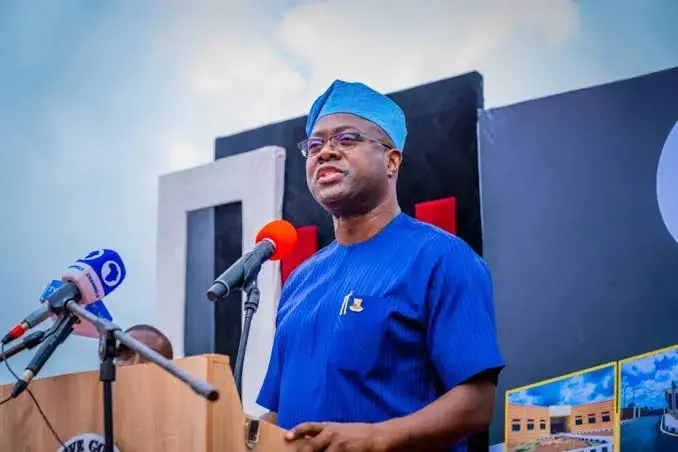
Governor Seyi Makinde has issued a strong warning that Nigeria must never slide into a one-party political structure, arguing that such a system would weaken democratic accountability, silence dissent, and limit the power of citizens to influence national direction. According to him, democracy is healthiest when multiple parties compete for public trust, ideas are debated openly, and voters have a genuine alternative to reward or punish leaders. He stressed that the strength of a nation’s democracy is measured not by the size of the ruling party, but by the vibrancy of its opposition and the maturity of its institutions.
Makinde explained that a one-party system gradually erodes internal checks and balances because political actors become complacent, secure in the belief that the absence of competition guarantees their continuation in power. He emphasized that when opposition voices are weakened, silenced, or discouraged, the people lose the essential mechanism that empowers them to demand better performance from those in government. In his words, “a nation cannot grow where those in power govern without fear of electoral consequences,” and Nigeria must remain vigilant against any political trend that threatens plurality.
The governor also highlighted that the rise of a one-party climate often happens subtly, not through an official declaration, but through political bullying, decamping for survival, weakened ideological structures, and the systematic reduction of alternative platforms. He noted that many Nigerian politicians migrate from one party to another not because of ideology but due to convenience or pressure, creating an environment where political diversity becomes shallow. According to him, a country that values democratic progress must encourage strong, stable parties rooted in principles, policies, and long-term visions.
Makinde further noted that political parties must be encouraged to evolve beyond electoral machines and into institutions capable of developing leaders, shaping public debate, and presenting clear policy alternatives. Without ideological clarity, he warned, the electorate becomes disconnected, and politics turns into a contest of personalities rather than principles. He argued that Nigerians deserve a system where different political platforms offer distinct options in governance, economic direction, and social development, rather than a homogenized space controlled by a dominant force.
He urged media organisations to play their constitutional role in safeguarding democracy by promoting constructive debate, scrutinizing those in power, and ensuring that the public remains informed about decisions affecting their lives. According to him, the media has a responsibility to prevent any political entity from monopolizing public discourse. Makinde maintained that journalists must remain vigilant, independent, and courageous in exposing attempts to suppress alternative viewpoints or consolidate partisan dominance.
Makinde’s comments came against the backdrop of increasing national conversations around political dominance and fears that the opposition landscape is weakening across the country. He warned that this trend creates a dangerous imbalance, as a country without a strong opposition is at risk of authoritarian drift. He described opposition parties as “engines of accountability” and argued that their decline would ultimately hurt citizens who rely on democratic competition to keep leaders responsive, transparent, and service-driven.
He also pointed out that Nigeria’s democratic history has shown that single-party dominance often leads to governance lapses, unchecked excesses, and loss of public trust. Makinde stated that once political competition disappears, the focus of leaders tends to shift from public welfare to internal power struggles and patronage distribution. He called for reforms that strengthen internal party democracy, promote transparency, and empower young people and women to participate meaningfully in governance and political leadership.
Makinde concluded by reiterating that Nigeria’s future depends on preserving its multiparty architecture and ensuring that no single political group becomes too powerful for the nation’s own good. He urged citizens to defend democratic values and actively participate in civic processes that guarantee fairness, balance, and choice. For him, the goal is not merely to maintain political variety, but to protect the constitutional principles that allow citizens to decide their leaders freely and hold them accountable when necessary.

Leave a comment
Your email address will not be published. Required fields are marked *

