
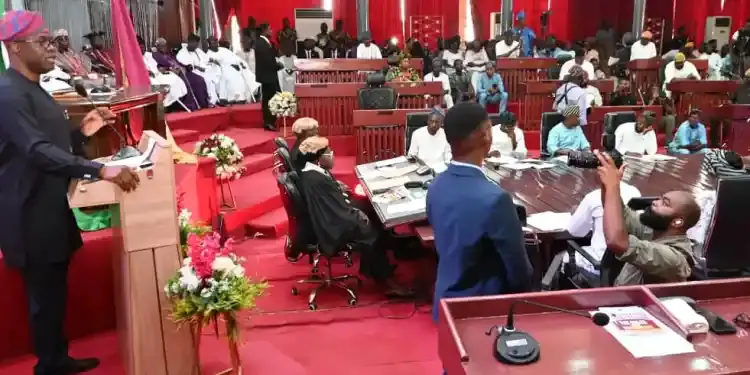
Governor Seyi Makinde of Oyo State is preparing to present the 2026 Appropriation Bill to the State House of Assembly on Monday, continuing his administration’s tradition of proactive budgeting. This marks the seventh time Makinde will formally submit a budget proposal to lawmakers, reflecting a steady commitment to institutional planning and governance.
According to sources close to the governor’s office, this upcoming budget will build on the foundations of the 2025 “Budget of Economic Stabilisation,” aiming to deepen investments in infrastructure, education, health and other critical sectors. The government is expected to prioritise capital projects that align with its medium-term development goals.
A significant portion of the proposed 2026 budget is likely to be allocated to infrastructure, especially road rehabilitation, urban renewal and rural connectivity. This focus reflects Makinde’s administration’s push to improve mobility and economic integration across the state’s zones.
Education is also expected to receive strong attention in the bill. Observers believe that continued funding for schools, teacher development, and student support programmes will form a central part of Makinde’s pitch to the Assembly, reinforcing his administration’s long-term vision for human capital development.
The health sector could attract increased funding, particularly for primary health-care centers, community-based health initiatives, and medical infrastructure. Given the financial pressures on the state and its citizens, there is a growing expectation that the government will propose cost-effective models that expand access, especially in underserved areas.
On the revenue side, Makinde’s team has indicated that part of the budget presentation will focus on mobilising internally generated revenue (IGR) more aggressively, while balancing this with responsible borrowing. This dual strategy aims to fund capital-intensive projects without over-reliance on external debt.
Also likely to feature in the bill are allocations for social welfare, security and technology-driven governance reforms. These reflect lessons from previous budgets, where Makinde has emphasised transparent implementation, stakeholder engagement and measurable outcomes.
As the Assembly prepares to receive the proposal, political watchers will closely monitor how lawmakers respond — especially on issues of fiscal discipline, sectoral priorities, and performance metrics. The presentation will set the tone for 2026’s policy direction and test the alignment between executive ambition and legislative approval.

Leave a comment
Your email address will not be published. Required fields are marked *

