
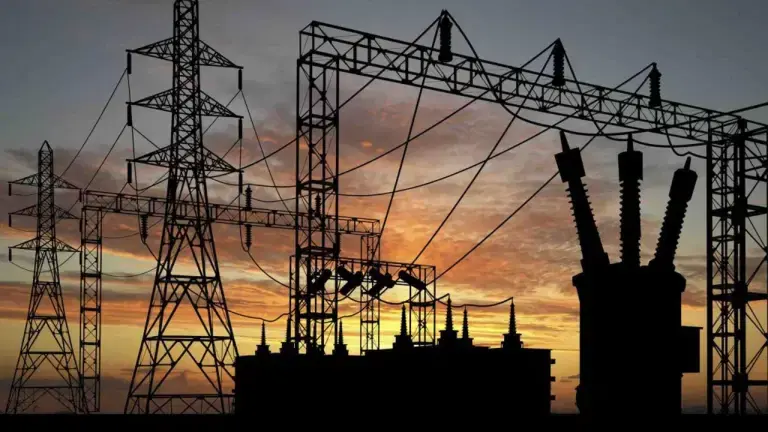
The fragile state of Nigeria's power infrastructure was laid bare once again on Tuesday morning as the national electricity grid suffered a total collapse, leaving millions of citizens and businesses without public power supply. The incident, which occurred in the early hours of January 27, 2026, resulted in a nationwide blackout that has paralyzed economic activities across the country. Data obtained from the Nigerian Independent System Operator (NISO), a semi-autonomous arm of the Transmission Company of Nigeria (TCN), indicated a catastrophic system failure, with power generation dropping to zero megawatts by 11:00 a.m.
This latest disturbance has effectively cut off supply to all eleven Electricity Distribution Companies (DisCos), rendering them unable to distribute energy to their franchise areas. From Lagos to Kano, and Port Harcourt to Maiduguri, reports of outages began flooding in shortly after dawn, confirming the widespread nature of the collapse. The sudden loss of power has forced hospitals, government offices, and private enterprises to switch to expensive backup diesel generators, further straining operational costs in an already challenging economic environment.
An industry source with direct knowledge of the grid's operations described the situation as a "total shutdown of the national transmission system." The source explained that a drop in load allocation to zero across all distribution channels is the definitive technical indicator of a complete grid failure. While the exact cause of the collapse—whether due to gas supply constraints, transmission line faults, or frequency imbalance—has not yet been officially detailed by the Transmission Company of Nigeria, the pattern is consistent with the recurring infrastructure frailty that has plagued the sector for decades.
The collapse has drawn sharp reactions from the public, who have grown increasingly weary of the instability in the power sector. For many Nigerians, the grid is a symbol of the nation's infrastructural struggles. The frequency of these collapses raises critical questions about the efficacy of recent investments and reforms aimed at stabilizing the network. Despite billions of naira poured into system upgrades, the transmission network remains susceptible to shocks, often cascading into full-blown blackouts that take several hours, sometimes days, to rectify.
In the immediate aftermath of the blackout, DisCos have been forced to issue apologies to their customers, citing the "system collapse" as the reason for the service interruption. However, without power from the National Control Centre (NCC) in Osogbo, these distribution firms are helpless. Their inability to supply electricity exacerbates the frustration of consumers who are already grappling with high tariffs and estimated billing issues. The reliance on the national grid as the sole source of transmission remains a strategic vulnerability for the nation's energy security.
Economic analysts warn that the cost of these blackouts is staggering. Small and medium-sized enterprises (SMEs), which form the backbone of the Nigerian economy, are disproportionately affected. Many cannot afford prolonged generator usage, leading to lost productivity and revenue. For larger industries, the instability necessitates massive capital expenditure on self-generation, costs that are ultimately passed down to the consumer in the form of higher prices for goods and services.
As of the time of filing this report, authorities had yet to provide a concrete timeline for full power restoration. Technical teams from the TCN are reportedly working to restart the grid, a delicate process that involves bringing generation units back online one by one and gradually stabilizing the frequency before reconnecting the distribution loads. The process requires precision to avoid triggering a secondary collapse during the restoration phase.
Ultimately, this latest grid failure serves as a stark reminder of the urgent need for a holistic overhaul of Nigeria's power sector. Beyond the immediate fix of restoring supply, stakeholders are calling for the decentralization of the transmission network and the rapid deployment of off-grid solutions to reduce reliance on the centralized system. Until these structural issues are addressed with political will and technical competence, the cycle of blackouts and apologies is likely to continue, leaving the nation's potential tethered to a flickering bulb.

Leave a comment
Your email address will not be published. Required fields are marked *

