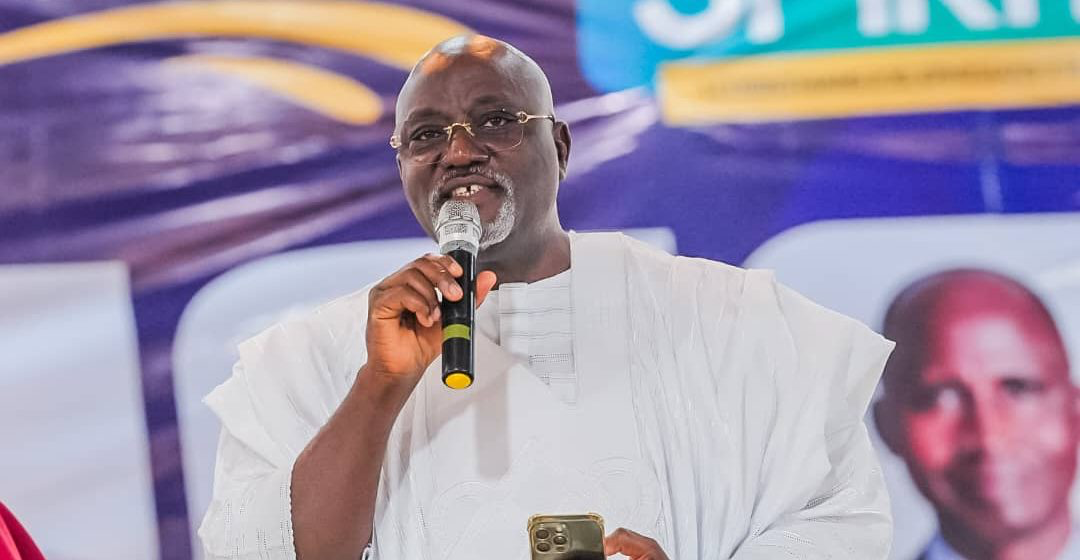
Earlier this week during the Okeho Day celebrations in Kajola Local Government, Oke-Ogun, residents used the public gathering to affirm loud and clear that they believe the state government has ignored them for too long. As the event’s special guest, the Deputy Governor, Bayo Lawal, attempted to deliver remarks — but was met with chants of “A O rowoyin,” a phrase that translates roughly to “we have seen nothing from your government.”
The crowd’s reaction left no doubt about the depth of local frustration. Many in attendance said that despite being part of Oyo State, communities in Kajola — including Okeho — have been starved of developmental attention. They pointed out poor infrastructure, dilapidated roads, lack of basic amenities, and minimal government presence as reasons behind their outcry.
Even supporters of the administration within the audience appeared startled, and the Chair of the Local Government could only look on helplessly. The bold public rejection during a festive gathering sent a strong message: for many residents, the government’s previous projects don’t count — they’ve seen little to benefit their immediate communities.
In response to the outburst, Deputy Governor Lawal paused his address. He reportedly acknowledged the loud feedback and the grievances expressed, but the real test lies ahead: will he carry the residents’ message truthfully to Governor Makinde and demand tangible action?
The article notes that beyond Okeho, other towns like Ilero — also in the same local government — suffer from similar neglect. Internal roads are in deplorable condition, and basic infrastructure has reportedly not been upgraded since decades past. Residents argue that elected local-government officials appear powerless under current state policies restricting local-government autonomy.
Though the state government had previously completed some major roads in Oke-Ogun — like Moniya–Iseyin and Oyo–Iseyin — for many in Kajola, these don’t compensate for lack of grassroots development and local government support. For them, the frustration runs deeper than isolated projects.
The event has drawn attention nationwide to the question of regional equity and representation in Oyo governance. If the Deputy Governor delivers a genuine report of the outcry, it could pressure the state executive to re-evaluate its development priorities and pay more attention to long-neglected areas. If ignored, however, it risks pushing communities further away from civic trust — a risky posture for any government ahead of major elections.
For now, Okeho’s outburst serves as a stark reminder: public celebrations and cultural events can quickly turn into demand platforms when citizens feel unheard. The coming weeks will show whether the protest becomes a turning point — or just another forgotten grievance.

Leave a comment
Your email address will not be published. Required fields are marked *