For over twenty-five years, the residents of Itasa community in the Iwajowa Local Government Area of Oyo State have found themselves locked in a protracted struggle against what they describe as systemic exploitation and environmental neglect. At the center of this conflict is Architype Industries Nigeria Limited, a firm accused by the locals of conducting mining operations without the requisite legal framework or tangible corporate social responsibility. Community leaders argue that despite decades of extraction activities on their ancestral lands, the town has seen zero developmental projects, leaving the populace to grapple with the ecological aftermath of unregulated mining while the company purportedly profits. The frustration has now reached a boiling point, with the community demanding that the company either regularize its operations in line with federal laws or vacate the land immediately.
The situation has drawn the attention of the Oyo State House of Assembly, prompting an investigation into the allegations of non-compliance and illegal practices. Anthony Ogunsola, the Chairman of the House Committee on Solid Minerals Development, has voiced strong concerns regarding the safety and economic implications of the mining activities in Itasa. During a recent assessment, the lawmaker highlighted that remote mining sites often become safe havens for criminal elements, including bandits and kidnappers, thereby threatening the security architecture of the entire Oke-Ogun region. He emphasized that the state government can no longer stand idly by while corporate entities extract resources without contributing to the security or infrastructural development of the host communities.
Central to the dispute is the alleged failure of the mining firm to sign a Community Development Agreement (CDA), a mandatory requirement under the Nigerian Minerals and Mining Act of 2007. According to legal representatives for the community, the company has operated for over two decades without this essential document, which is designed to ensure that host communities benefit economically from resource extraction. The community has requested a suite of fifteen specific compliance documents, including a valid Certificate of Incorporation, an Environmental Impact Assessment (EIA) certificate, and proof of host community consent. Stakeholders insist that the refusal to provide these documents suggests a deliberate attempt to evade regulatory oversight and deny the community its statutory rights.
The Onitile of Itasa, Oba Michael Sijuola Oyediran, has publicly thrown his weight behind the community's demands, expressing profound disappointment in the firm's conduct. The monarch noted that while other towns in the state with fewer natural resources have flourished due to responsible corporate partnerships, Itasa has stagnated. He recounted numerous failed attempts to bring the company to the negotiation table, stating that the patience of his people has been exhausted. The traditional ruler’s endorsement of recent peaceful protests underscores the severity of the grievances, as the community seeks to draw the attention of both federal and state authorities to what they term a case of "resource curse" where natural endowment leads to impoverishment rather than prosperity.
In its defense, the management of Architype Industries has dismissed the allegations as the product of corporate sabotage and misinformation. The Managing Director, Adeniran Ajibade, claims that the company is fully compliant with federal regulations and is currently working under the direct supervision of the Ministry of Mines in Abuja. He argued that the demand for specific regulatory documents by the community is misplaced, asserting that such disclosures are the prerogative of the regulatory body, not the host residents. Furthermore, the firm has alleged that the unrest is being fueled by compromised individuals acting as proxies for Chinese interests seeking to usurp the company’s mining titles, painting the conflict as a corporate turf war rather than a genuine community agitation.
Legal counsel to the Itasa community, Femi Aborisade, has strongly rebutted the company’s defense, describing the refusal to sign the CDA as a flagrant violation of Nigerian law. He pointed out that Section 116 of the Mining Act makes the conclusion of a Community Development Agreement a condition precedent for the commencement of any mining operation. By continuing to extract minerals without this agreement, the lawyer argues that the firm is operating illegally, regardless of whatever federal licenses it may hold. The legal team has warned that the government’s recent ultimatum for mining companies to regularize their documentation or face revocation of licenses must be strictly enforced to protect vulnerable communities from such predatory practices.
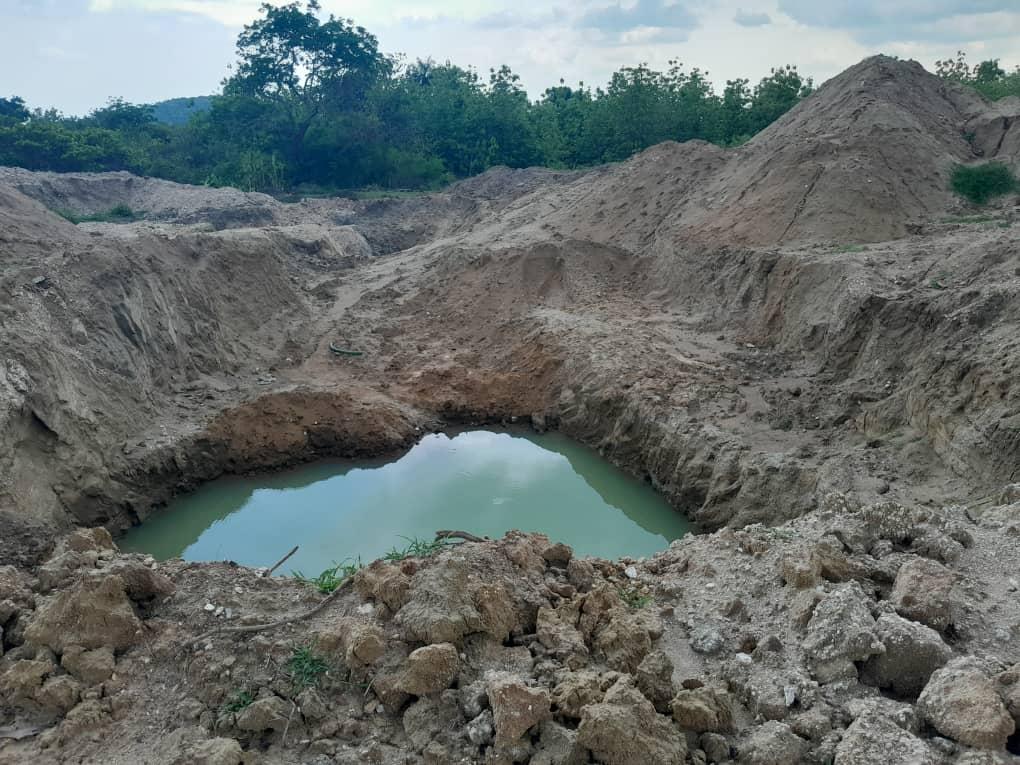
The environmental toll of the unchecked mining activities has also become a major point of contention. Prof. Bayo Aborisade, speaking on behalf of the community, detailed how the lack of a proper Environmental Impact Assessment has led to significant degradation of the local ecosystem. He cited the destruction of arable farmland, pollution of water sources, and the destabilization of the soil structure as direct consequences of the company’s operations. The community fears that without an immediate remediation plan, the land will be rendered useless for future generations, creating a legacy of ecological disaster that far outweighs any temporary economic gains the mining might have purportedly brought to the state.
As the standoff continues, the eyes of stakeholders in the solid minerals sector are fixed on the Federal Ministry of Solid Minerals Development to see if it will enforce its own regulations. The deadline for companies to conclude CDAs with host communities has passed, yet operations in Itasa reportedly continue unabated. The resolution of this conflict will likely serve as a litmus test for the federal government's commitment to sanitizing the mining sector. For the people of Itasa, the demand remains simple and non-negotiable: the mining firm must respect the rule of law and the rights of the indigenous people, or it must cease its operations and face the full weight of justice.

Leave a comment
Your email address will not be published. Required fields are marked *