
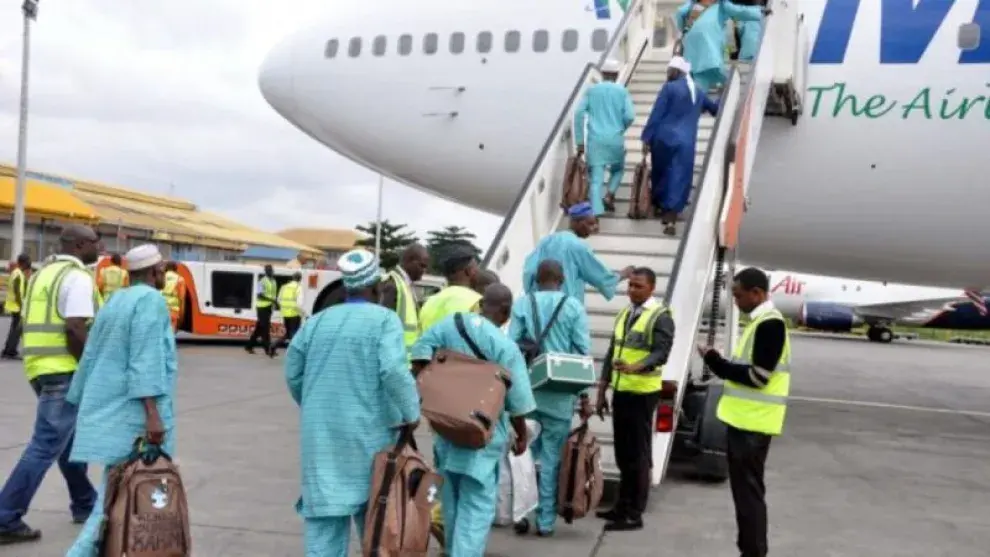
The Oyo State Government has formally announced a major logistical breakthrough for the 2026 Hajj exercise, confirming that intending pilgrims will be airlifted directly to Saudi Arabia from the Ladoke Akintola International Airport in Ibadan. This strategic development marks the culmination of a multi-year effort to upgrade the state’s aviation infrastructure to international standards, effectively ending the decades-long reliance on the Muritala Muhammed International Airport in Lagos for religious pilgrimages. The announcement was made by the Chairman of the Oyo State Muslim Pilgrim Welfare Board, Sheikh Hashim Atere, during a press briefing in the state capital, signaling a new chapter in the state’s transportation capabilities.
The decision to operationalize the Ibadan airport for international flights follows the successful completion of critical runway extensions and facility enhancements commissioned by the current administration. These upgrades were specifically designed to accommodate wide-bodied aircraft, a technical prerequisite for long-haul international travel. Sheikh Atere cited the recent successful landing and takeoff of the presidential aircraft, which conveyed President Bola Ahmed Tinubu to Ibadan for the coronation of the Olubadan in September, as definitive proof of the airport’s technical readiness. This high-profile test case served to validate the structural integrity of the runway and the efficiency of the airport’s navigational systems, assuaging any regulatory concerns regarding safety and capacity.
Administratively, the state has secured the necessary clearances from federal aviation authorities to proceed with the airlift. The Ministry of Aviation and Aerospace Development conducted multiple site inspections prior to the presidential visit, reportedly expressing satisfaction with the quality of the infrastructure improvements. These regulatory endorsements are crucial, as they clear the path for the deployment of the large commercial carriers typically used for Hajj operations. By meeting these stringent federal standards, the Oyo State Government has effectively positioned the Ladoke Akintola Airport as a viable alternative hub for the South West region, potentially decongesting the heavy air traffic often experienced in Lagos during peak pilgrimage seasons.
For the thousands of intending pilgrims from Oyo State, this localization of the airlift process promises a significant reduction in travel-related stress and logistical overhead. Historically, the journey to the Hajj camps in Lagos involved navigating the often unpredictable traffic of the Lagos-Ibadan Expressway, adding hours of fatigue and security risks to an already rigorous spiritual journey. The ability to depart from a local facility allows for better crowd control, streamlined luggage processing, and a more dignified departure experience for the state's citizens. It also enables family members to see off their loved ones with greater ease, fostering a stronger sense of community participation in the religious observance.
Economically, the activation of the airport for international flights is expected to generate immediate commercial benefits for the local economy. The influx of pilgrims, airline staff, and regulatory officials during the Hajj season will stimulate demand for hospitality, catering, and ground transport services in the Alakia district and greater Ibadan. Furthermore, demonstrating the airport's capability to handle international cargo and passenger volumes opens the door for future commercial routes, potentially attracting investment from agro-allied industries seeking to export produce directly from the state. This aligns with the broader economic agenda of the administration to transform Ibadan into a connectivity node that links the agrarian potential of the hinterland with global markets.
The Muslim Pilgrim Welfare Board has also emphasized the strict adherence to administrative deadlines to ensure the success of this inaugural international operation. Sheikh Atere issued a firm reminder regarding the December 5th payment deadline for intending pilgrims, stating that there would be no extensions. This rigidity suggests that the logistics for the 2026 exercise are already in an advanced stage of planning, requiring precise passenger manifests to coordinate with the designated air carriers. The board’s confidence in meeting these tight schedules reflects the enhanced operational autonomy granted by the governor, whose administration has been credited with providing unwavering financial and political support to the project.
In the broader political context, the delivery of an international-grade airport fulfills a key infrastructure promise of the Makinde administration. The project has often been cited as a litmus test for the state's ability to execute large-scale capital projects that transcend immediate political cycles. By successfully integrating the Hajj airlift into the airport’s operational portfolio, the government reinforces its narrative of sustainable development and modernization. It demonstrates a capacity to leverage federal partnerships—such as those with the Ministry of Aviation—to deliver tangible dividends to the state electorate, particularly the influential demographic of Muslim faithfuls.
As preparations for the 2026 Hajj accelerate, the focus will now shift to the practical implementation of the airlift strategy. This includes the establishment of temporary Hajj camps near the airport, the coordination of immigration and customs protocols on-site, and the management of flight schedules to align with Saudi Arabian landing slots. The successful execution of this operation will likely serve as a blueprint for other states seeking to decentralize their pilgrimage logistics. For now, the confirmation of the Ibadan airlift stands as a significant milestone, transforming a local aerodrome into a gateway to the holy land and symbolizing the expanding global reach of Oyo State.

Leave a comment
Your email address will not be published. Required fields are marked *

